The ephod is one of the most fascinating — and most misunderstood — objects in all of Scripture. Most people have heard the word. Few can tell you what it actually was, why God cared so deeply about its design, or why it shows up in some of the Bible’s most dramatic moments.
Here’s what’s remarkable: the ephod Bible meaning spans priestly glory, divine guidance, personal worship, national idolatry, and — ultimately — Jesus Christ himself. That’s a lot of ground for one garment to cover.
This guide digs into every layer. By the end, you’ll understand the ephod’s spiritual significance in a way that most Sunday sermons never touch.
What Exactly Is an Ephod? Getting the Foundation Right
Before diving into symbolism and theology, let’s nail down the basics — because a lot of popular articles get this wrong.
The Hebrew Word “Ephod” — What It Actually Means
The English word “ephod” comes directly from the Hebrew word ephod: ‘êphôd (אֵפוֹד), Strong’s number H646. It’s pronounced ay-fode. The root likely connects to a verb meaning “to put on” or “to clothe,” though scholars debate the precise etymology.
Here’s the problem with most translations: they struggle with this word. The King James Version simply transliterates it as “ephod.” Some modern versions attempt “vest” or “apron,” but those translations feel laughably inadequate when you read God’s detailed construction blueprint in Exodus 28. This wasn’t a work apron. It was a theological statement in fabric and gold.
The ancient Hebrew culture surrounding this garment treated it with reverence. It wasn’t a decoration — it was an instrument.
The Two Types of Ephods in Scripture — and Why the Distinction Matters
Here’s something most articles skip entirely: there wasn’t just one kind of ephod in the Old Testament. There were at least two distinct types, with very different purposes.
| Type | Who Wore It | Material | Purpose |
|---|---|---|---|
| High Priest’s Ephod | Aaron and his successors | Gold thread, blue, purple, scarlet yarn, fine linen | Divine consultation, intercession before God |
| Linen Ephod | Ordinary priests, Levites, Samuel, David | Fine white linen | Priestly service, worship, access to God |
| Gideon’s Golden Ephod | Became an idol | 1,700 shekels of gold | Originally commemorative — became idolatrous |
| Micah’s Ephod | A hired priest | Unknown material | False worship, private religion |
Missing this distinction causes enormous confusion. When seven-year-old Samuel wore a linen ephod meaning priestly service in 1 Samuel 2:18, he wasn’t wearing the same thing the High Priest wore on the Day of Atonement. Same name — completely different garment, completely different context.
The High Priest’s Ephod — Every Detail, Every Meaning

If there’s one section worth reading slowly, it’s this one. God’s instructions for the High Priest’s ephod in Exodus 28:6–14 are strikingly specific. He didn’t say “make something nice.” He gave exact materials, exact measurements, exact construction methods.
That specificity is itself a message.
God’s Exact Specifications (Exodus 28:6–14)
The ephod gold blue purple scarlet design used six materials:
- Gold thread — hammered into thin wire, woven through the fabric
- Blue yarn — representing heaven and divine authority
- Purple yarn — the color of royalty
- Scarlet yarn — evoking sacrifice and blood
- Fine twisted linen — purity and righteousness
- Skillful craftsmanship — explicitly Spirit-empowered (Exodus 31:1–5)
God appointed a man named Bezalel, filled him with the Holy Spirit, and gave him supernatural skill to build these sacred objects in the Old Testament correctly. This wasn’t folk art. It was divinely commissioned craftsmanship.
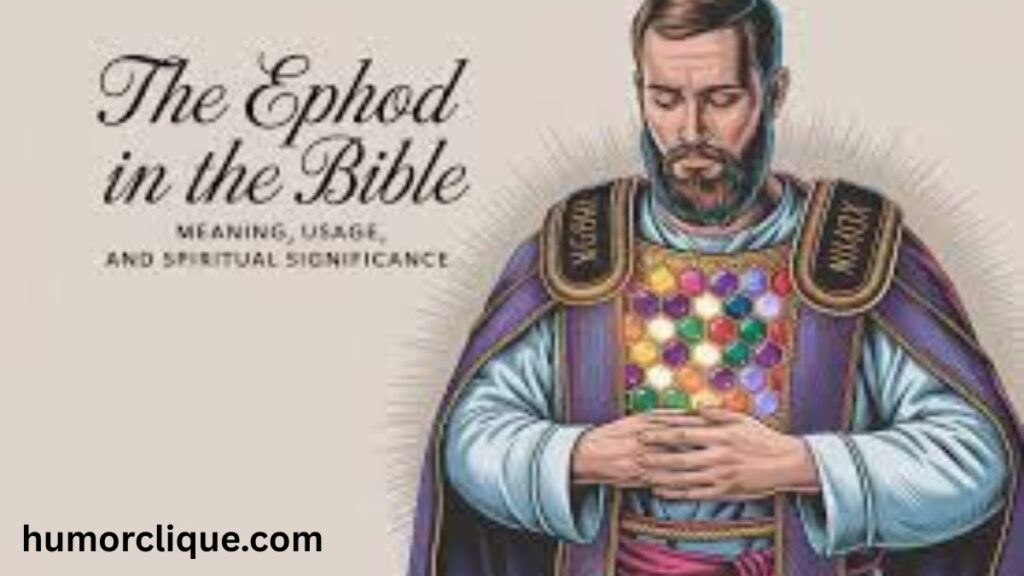
Two onyx stones on the priest’s shoulders bore the names of the twelve tribes — six names on each stone, engraved in birth order. Before the High Priest said a single word in God’s presence, he already carried Israel on his body.
The Breastpiece of Judgment — The Ephod’s Inseparable Partner
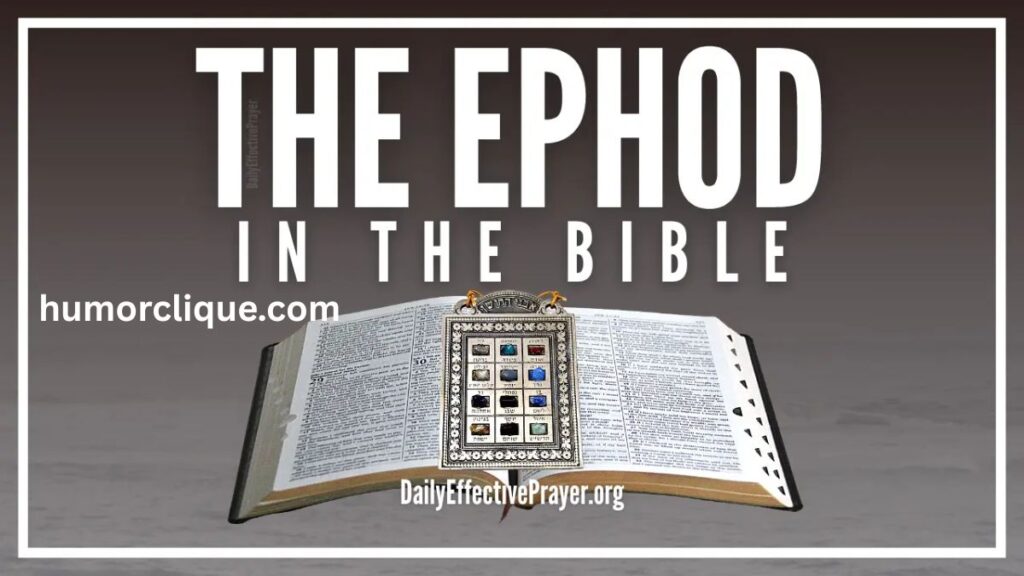
The breastpiece of judgment (choshen mishpat) wasn’t a separate accessory — it was structurally bound to the ephod by gold rings and chains. Exodus 28:28 commands that the breastpiece must never be loosened from the ephod.
They function as one unit. Theologically, that’s significant: intercession (the ephod) and judgment (the breastpiece) are inseparable in God’s design.
The breastpiece held twelve gemstones representing the twelve tribes of Israel — a different stone for each tribe. The High Priest carried Israel on his shoulders in strength and over his heart in love. Both postures mattered.
The Urim and Thummim — Israel’s Divine Oracle
Tucked inside the breastpiece were two objects almost no one discusses properly: the Urim and Thummim.
Urim (אוּרִים) likely means “lights” or “curses.” Thummim (תֻּמִּים) likely means “perfections” or “innocence.” Scholars genuinely debate their exact function — but the biblical record makes the practical function clear.
They were divine guidance Scripture made tangible. God used them to give yes/no answers to questions of national importance:
“He shall stand before Eleazar the priest, who shall inquire for him by the judgment of the Urim before the Lord.” — Numbers 27:21
Some of the most decisive moments in Israel’s history hinged on the Urim Thummim meaning — including military campaigns, the selection of Saul as king, and David’s tactical decisions during Saul’s pursuit.
Fascinatingly, they go silent. After the Babylonian exile, the returning community couldn’t determine certain priestly lineages until “a priest with Urim and Thummim” arose (Ezra 2:63). They never did. The divine guidance instrument disappeared — making way for something better.
The Ephod Across Scripture — Key Appearances You Can’t Ignore
The ephod in the Old Testament appears in moments of glory, moments of grief, and moments of terrible failure. Each appearance teaches something distinct.
Samuel’s Linen Ephod — Innocence Before God (1 Samuel 2:18)
A small child wearing a priestly vestment — the image is almost disarming. Hannah dedicated Samuel before he could even understand what dedication meant. Yet there he is, ministering before the Lord in a linen ephod, while Eli’s biological sons — Hophni and Phinehas — corrupt the very priesthood they inherited.
Same institution. Opposite hearts. The garment alone meant nothing. The heart wearing it meant everything.
David Dancing in a Linen Ephod (2 Samuel 6:14)
Here’s one of Scripture’s most electrifying scenes. Israel’s king — royalty, military commander, national icon — strips off his royal robes and dances before the Ark of the Covenant wearing nothing but a linen ephod.
His wife Michal watched from a window and “despised him in her heart” (2 Samuel 6:16). David’s response is unforgettable:
“I will celebrate before the Lord. I will become even more undignified than this.” — 2 Samuel 6:21–22
A king lowering himself to priestly posture. In ancient Israel worship, this was radical humility — and it foreshadowed something: a coming figure who would be both king and priest simultaneously.
Gideon’s Golden Ephod — A Hero’s Fatal Mistake (Judges 8:24–27)
Gideon defeated the Midianites. The nation offered him kingship. He refused — and then did something arguably worse. He collected 1,700 shekels of gold from the war spoils and fashioned a golden ephod, placing it in his hometown of Ophrah.
The text doesn’t soften what happened next:
“All Israel prostituted themselves by worshiping it there, and it became a snare to Gideon and his household.” — Judges 8:27
This is the Gideon ephod idol cautionary tale in its starkest form. Gideon had no intention of creating an idol. He wanted to commemorate a victory. But unauthorized worship — no matter how sincere — corrupts. The ephod idol cautionary tale here is painfully relevant: good intentions don’t sanctify wrong methods.
Micah’s Private Ephod and the Tribe of Dan (Judges 17–18)
If Gideon’s story is a warning, Micah’s story is a tragedy. A man builds a personal shrine, hires a wandering Levite, and fabricates his own religion complete with an ephod, household idols, and a made-up priest.
Then the tribe of Dan steals the whole setup and scales it nationally.
The narrator’s summary haunts the entire book of Judges: “In those days there was no king in Israel. Everyone did what was right in his own eyes.” (Judges 21:25)
Self-invented worship practices — using sacred-sounding equipment without divine authorization — aren’t new. They’re as old as Micah’s stolen shrine.
Abiathar and the Ephod During David’s Fugitive Years (1 Samuel 23:6–12)
One of the most underappreciated uses of the ephod Bible meaning comes during David’s years as a fugitive. When Abiathar escaped Saul’s massacre at Nob, he brought the ephod with him — and David immediately put it to use.
Concrete consultations using the ephod:
- Should I rescue Keilah? — Yes. (1 Samuel 23:4)
- Will the people of Keilah betray me to Saul? — Yes. David evacuated. (1 Samuel 23:12)
- Should we pursue the Amalekites who raided Ziklag? — Yes, you’ll recover everything. (1 Samuel 30:8)
David didn’t use the ephod to rubber-stamp decisions he’d already made. He used it to seek God direction prayer before acting. That’s a critical distinction the next section explores further.
Spiritual Significance — What the Ephod Symbolized Then and Now
The Ephod as the Garment of Mediation
The High Priest bore the names of the twelve tribes of Israel on his body in two ways:
- On his shoulders — strength, responsibility, the weight of service
- Over his heart — love, compassion, personal care
This wasn’t accidental design. God specified both. High priest intercession meant carrying people into God’s presence physically, symbolically, and spiritually — which is exactly what an intercessor does in prayer. You don’t just mention people. You carry them.
The Ephod as a Shadow of Christ’s High Priesthood
This is where the ephod spiritual significance reaches its fullest expression.
Every element of the High Priest’s ephod points forward. The New Covenant High Priest described in the book of Hebrews fulfills what Aaron’s garment only depicted:
“Therefore, since we have a great high priest who has ascended into heaven, Jesus the Son of God, let us hold firmly to the faith we profess.” — Hebrews 4:14
Consider the direct comparisons:
| Aaron’s Ephod | Jesus, Eternal High Priest |
|---|---|
| Carried 12 tribes on the breastpiece | Intercedes for all who come to God (Hebrews 7:25) |
| Urim and Thummim for divine guidance | Christ himself is the living Word (Hebrews 1:1–2) |
| Entered the earthly Holy of Holies once a year | Entered heaven itself with his own blood (Hebrews 9:12) |
| Required ongoing sacrifices | One sacrifice, sufficient forever (Hebrews 10:14) |
| Could die, be replaced | “He always lives to intercede” (Hebrews 7:25) |
The Jesus eternal High Priest needs no garment. He is what the garment pointed toward. Hebrews 4:16 access God makes this beautifully plain: because of Christ, you approach the throne of grace boldly — not through a priest in an ephod, but directly, through the Son.
Paul extends this further. Clothed in Christ Galatians 3:27 uses identical imagery — “you have clothed yourselves with Christ.” The believer’s “ephod” is Christ himself.
When the Ephod Becomes an Idol — A Perennial Warning
Three times in Scripture, an ephod becomes a spiritual disaster:
- Gideon — a warrior’s memorial becomes a national snare
- Micah — a man’s private religion poisons a tribe
- The Danites — stolen worship spreads like an infection
The pattern is consistent. Something that begins as a sacred symbol worship tool gets elevated to the center — and God gets pushed to the margins. The ephod idol cautionary tale isn’t just ancient history. Any spiritual tool — prayer methods, denominational traditions, religious rituals, even Bible study techniques — can slide into that slot.
What the Ephod Teaches Believers Today
Access to God Is Not Self-Appointed
The sacred access to God the ephod represented was exclusive — not out of cruelty but out of protection. The covenant theology behind the priestly system said: sinful humans need a qualified mediator to approach a holy God.
The New Testament’s answer isn’t “everyone’s a priest, so design your own access.” It’s “Christ is the one qualified Mediator — and through him, everyone gets in.” The exclusivity shifted location (from Aaron to Jesus) not direction (God still defines access on his terms).
Intercession Means Carrying Others, Not Just Yourself
The intercessory prayer symbolism embedded in the ephod’s design is stunning. Twelve names engraved in stone. Twelve gems set in gold over the heart. The High Priest couldn’t forget the people even if he tried — they were literally on his body.
Priestly calling believers who pray for others should feel this weight. Not a general “bless everyone, amen” — but specific names, specific needs, carried deliberately into God’s presence.
Seek Genuine Guidance, Not Just Confirmation
The difference between David’s ephod consultations and Gideon’s ephod construction is instructive. David asked God before deciding. He was genuinely open to any answer. Gideon built a monument to his own military success.
Seek God direction prayer means being willing to hear “no,” “wait,” or “not that way.” The Holy Spirit divine guidance available to believers today works the same way — it isn’t a rubber stamp.
Craftsmanship and Intentionality in Worship Matter
God told Bezalel exactly how to build the ephod. He didn’t say “whatever feels right.” The ephod gold blue purple scarlet specifications weren’t arbitrary — they were a language. Color, material, weight, and structure all communicated theological truth.
Christ-centered worship isn’t casual. It’s thoughtful. The Spirit empowers genuine excellence — not performance, but sincere, skillful, intentional offering.
FAQs About the Ephod in the Bible
What is the ephod in the Bible?
The ephod is a sacred garment worn by priests in ancient Israel, most notably the High Priest Aaron and his successors. It ranged from an elaborate, jewel-encrusted vestment used for divine consultation to a simple linen garment worn during priestly service. Its design is specified in Exodus 28 and it appears throughout the Old Testament in both legitimate worship and cautionary tales of idolatry.
Who wore the ephod in the Bible?
Several figures wore ephods in Scripture: Aaron and all subsequent High Priests (Exodus 28), the young Samuel during his service at Shiloh (1 Samuel 2:18), David during the Ark’s procession to Jerusalem (2 Samuel 6:14), and the eighty-five priests of Nob (1 Samuel 22:18). Gideon also made one — though it became an idol rather than a legitimate priestly garment.
What was the purpose of the ephod?
The Old Testament priestly garments served multiple functions. The High Priest’s ephod was used for divine guidance through the Urim and Thummim, for intercession on behalf of Israel, and as the defining uniform of priestly identity and office. Linen ephods marked priestly service more broadly.
What are the Urim and Thummim, and how do they connect to the ephod?
The Urim and Thummim were sacred objects kept inside the breastpiece attached to the ephod. They functioned as a divine guidance Scripture mechanism — providing God’s yes/no direction on major decisions. Their exact physical form is unknown; what’s clear is that God spoke through them. They stopped functioning after the Babylonian exile, presumably because the New Covenant would bring a more direct form of divine communication.
Why did Gideon’s ephod become a sin?
Gideon used 1,700 shekels of gold from Midianite war spoils to create an ephod in Ophrah. Though his intent seems commemorative rather than idolatrous, the result was ancient Israel worship corrupted: the people “prostituted themselves” before it (Judges 8:27). He had no divine authorization, no priestly lineage, and no Levitical commission. Unauthorized worship practices — however well-intentioned — violate God’s prescribed order.
Is there a “lesser ephod” and “greater ephod” in Scripture?
Not by those names — but the distinction is real. The High Priest’s ephod (described in Exodus 28) was elaborate and unique, used for the specific purpose of divine consultation and intercession. The linen ephod was a simpler garment worn by priests and worshipers in service to God — functionally and materially distinct from the High Priest’s version.
Does the ephod have meaning for Christians today?
Absolutely — through typology. The ephod spiritual significance finds its ultimate fulfillment in Jesus eternal High Priest, who carries his people before God not in gemstones but in his own intercession. Believers, described as a “royal priesthood” in 1 Peter 2:9 and “clothed in Christ” in Galatians 3:27, inherit the spiritual reality the ephod symbolized — direct access to God through a perfect Mediator.
What do scholars say about the physical appearance of the ephod?
Scholarly opinion varies. Some argue the High Priest’s ephod was a sleeveless vest or apron covering the front and back torso, held at the shoulders and bound at the waist. Others suggest it was more like a short skirt or apron covering only the lower body. The breastpiece of judgment and shoulder pieces were almost certainly front-facing additions to whatever base garment it comprised. The linen ephod worn by Samuel and David was likely simpler — closer to a short sleeveless tunic.
Conclusion — The Ephod’s Story Isn’t Over
The ephod traveled a remarkable journey through Scripture. It began as a divinely specified sacred garment in the wilderness tabernacle — gleaming with gold and precious stones, carrying a nation’s names into God’s presence. It passed through the hands of faithful priests, child worshipers, dancing kings, well-meaning heroes, and corrupt opportunists alike.
Its story ends — as all Old Testament shadows do — at the cross. The New Testament fulfillment is complete. Jesus eternal High Priest entered heaven itself with his own blood, carrying not twelve tribes on gemstones, but all who come to God through him, engraved on his heart.
The ephod Bible meaning isn’t a museum piece. It’s a mirror — showing believers who they are in Christ, what access they now have, and what genuine intercession looks like.
One final question worth sitting with: whose names are you carrying into God’s presence today?
Sources & Further Study:
- Blue Letter Bible — Strong’s H646 (Ephod)
- Bible Gateway — Exodus 28 (ESV)
- Bible Gateway — Hebrews 4:14–16
- Vine’s Expository Dictionary of Old and New Testament Words
- IVP Bible Background Commentary: Old Testament — John H. Walton