
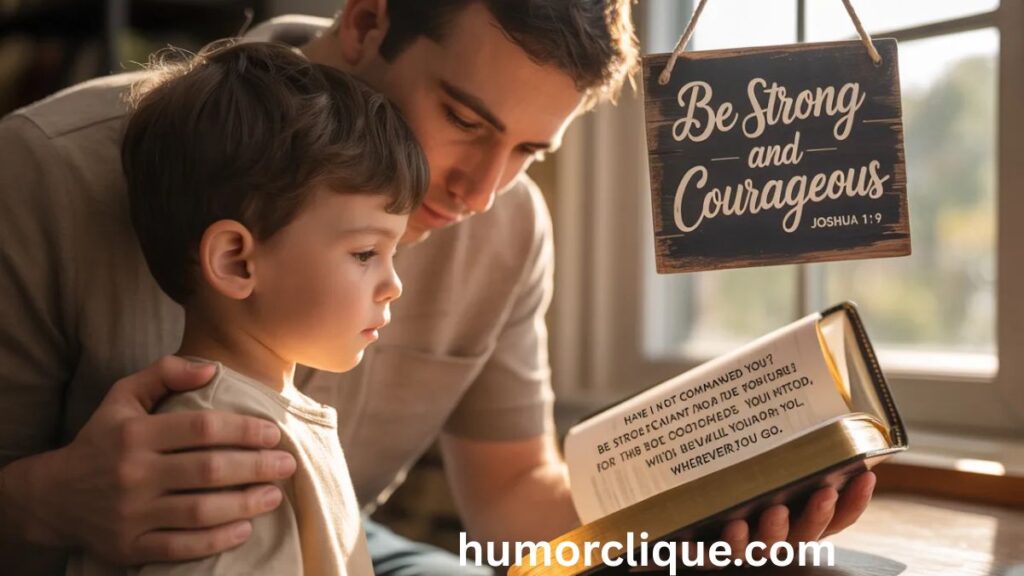
Is “Liam” in the Bible? No.
But before you close this page, let me tell you something remarkable.
The moment Sarah held her newborn son and whispered “Liam” for the first time, she had no idea she’d given him a name that echoes one of Scripture’s most powerful promises.
Three years later, when her son faced his first day of kindergarten—tears streaming, small hand gripping hers—she knelt down and spoke words that would become their family anchor:
“Be strong and courageous, for the Lord your God will be with you wherever you go.” — Joshua 1:9
That verse captures the Liam Bible verse meaning perfectly.
While “Liam” doesn’t appear in Scripture, its meaning—”resolute protector”—runs like a golden thread through the Bible’s greatest stories.
From Joshua leading Israel into impossible battles to David protecting his people as their shield. From Paul’s “helmet of salvation” to Christ’s ultimate sacrifice as our defender.
Even more fascinating: the Hebrew name Eliam (meaning “God is my people”) appears in 1 Chronicles 3:5 and 2 Samuel 23:34, creating a beautiful scriptural bridge to your son’s modern name.g “God is my people”) appears in 1 Chronicles 3:5 and 2 Samuel 23:34, creating a beautiful scriptural bridge to your son’s modern name.
What Does Liam Mean? Etymology and Origins
Liam derives from the Irish shortened form of William, which traces to Germanic roots: “wil” (will, desire) and “helm” (helmet, protection). Combined, these create the powerful meaning: “resolute protector” or “strong-willed defender.”
Why Liam Became Popular Among Christian Families
According to Social Security Administration data, Liam ranked #1 for boys’ names in the United States consecutively from 2017–2023. Christian parents increasingly choose Liam because it:
- Represents biblical values (strength, courage, protection) without being overtly religious
- Sounds modern yet carries timeless meaning
- Connects to spiritual warfare imagery through the “helmet” etymology
- Balances strength with approachability
| Aspect | Details |
| Origin | Irish (from William) |
| Root Language | Germanic |
| Literal Meaning | Resolute protector |
| Biblical Parallel | Eliam (God is my people) |
| Spiritual Symbol | Helmet of Salvation (Ephesians 6:17) |
| US Ranking | #1 (2017-2023) |
| Core Themes | Strength, courage, divine protection |
Liam vs. Biblical Names: Complete Comparison
| Name | Origin | Meaning | Biblical | Syllables | Popularity Rank | Trend | Similar Names | |
| Liam | Irish | Strong-willed warrior and protector | No | 2 | #1 | ➡️ Stable | William, Noah, Elijah | |
| Noah | Biblical | Rest, comfort | Yes – Genesis patriarch | 2 | #2 | 📈 Rising | Liam, Elijah, Jonah | |
| Oliver | Germanic | Olive tree | No | 3 | #3 | 📈 Rising | Owen, Oscar, Otto | |
| Elijah | Biblical | My God is Yahweh | Yes – Major prophet | 3 | #4 | ➡️ Stable | Elias, Isaiah, Ezra | |
| James | Biblical | Supplanter (from Jacob) | Yes – Apostle | 1 | #5 | ➡️ Stable | Jacob, John, Joseph | |
| William | Germanic | Resolute protector | No | 2 | #6 | 📉 Declining | Liam, Wilson, Walter | |
| Benjamin | Biblical | Son of the right hand | Yes – Jacob’s youngest son | 3 | #7 | ➡️ Stable | Bennett, Benson, Bentley | |
| Lucas | Greek | Light-giving | Yes – Gospel writer | 2 | #8 | 📈 Rising | Luke, Luca, Lukas | |
| Henry | Germanic | Estate ruler | No | 2 | #9 | 📈 Rising | Harry, Harrison, Harvey | |
| Theodore | Greek | Gift of God | No (but religious meaning) | 3 | #10 | 📈 Rising | Theo, Thaddeus, Thomas | |
| Michael | Biblical | Who is like God? | Yes – Archangel | 2 | #14 | 📉 Declining | Mitchell, Miles, Micah | |
| Daniel | Biblical | God is my judge | Yes – Prophet | 2 | #15 | ➡️ Stable | David, Nathaniel, Gabriel | |
| Matthew | Biblical | Gift of God | Yes – Apostle & Gospel writer | 2 | #18 | 📉 Declining | Matthias, Max, Mason | |
| David | Biblical | Beloved | Yes – Greatest king of Israel | 2 | #27 | 📉 Declining | Davis, Davion, Davin | |
| Samuel | Biblical | Heard by God | Yes – Prophet | 3 | #25 | ➡️ Stable | Simon, Solomon, Saul | |
| Isaac | Biblical | Laughter | Yes – Son of Abraham | 2 | #39 | ➡️ Stable | Isaiah, Israel, Ivan | |
| Joshua | Biblical | God is salvation | Yes – Led Israel into Canaan | 3 | #55 | 📉 Declining | Josiah, Jonas, Joel | |
| Caleb | Biblical | Faithful, devotion | Yes – Faithful spy | 2 | #51 | ➡️ Stable | Caden, Cole, Connor | |
| Nathan | Biblical | He gave | Yes – Prophet | 2 | #66 | 📉 Declining | Nathaniel, Nolan, Noah | |
| Ezra | Biblical | Help | Yes – Priest-scribe | 2 | #47 | 📈 Rising | Ezekiel, Elijah, Emmett | |
| Gabriel | Biblical | God is my strength | Yes – Archangel | 3 | #35 | ➡️ Stable | Gideon, Gavin, Grant | |
| Adam | Biblical | Man, earth | Yes – First human | 2 | #89 | 📉 Declining | Aiden, Austin, Aaron | |
| Joseph | Biblical | He will add | Yes – Jacob’s son & Jesus’ father | 2 | #24 | ➡️ Stable | Josiah, Jonas, Jordan | |
| Aaron | Biblical | High mountain, exalted | Yes – First high priest | 2 | #63 | 📉 Declining | Aron, Arlen, Arlo | |
| Jacob | Biblical | Supplanter | Yes – Patriarch (became Israel) | 2 | #13 | 📉 Declining | Jake, Jackson, Jacoby | |
| Zachary | Biblical | God remembers | Yes – John Baptist’s father | 3 | #148 | 📉 Declining | Zane, Zander, Zayn | |
| Luke | Biblical | Light-giving | Yes – Gospel writer | 1 | #32 | ➡️ Stable | Lucas, Luca, Lucian | |
| John | Biblical | God is gracious | Yes – Beloved apostle | 1 | #28 | 📉 Declining | Jonathan, Jonas, Johnny | |
| Peter | Biblical | Rock, stone | Yes – Chief apostle | 2 | #211 | 📉 Declining | Pierce, Parker, Paxton | |
| Simon | Biblical | He has heard | Yes – Original name of Peter | 2 | #256 | ➡️ Stable | Silas, Sebastian, Stefan | |
| Andrew | Biblical | Manly, strong | Yes – First apostle called | 2 | #52 | 📉 Declining | Anders, Andre, Anderson | |
| Thomas | Biblical | Twin | Yes – Apostle | 2 | #48 | ➡️ Stable | Tomas, Timothy, Tobias | |
| Philip | Greek | Lover of horses | Yes – Apostle | 2 | #431 | 📉 Declining | Phillip, Phoenix, Finn | |
| Timothy | Biblical | Honoring God | Yes – Paul’s protégé | 3 | #177 | 📉 Declining | Titus, Theodore, Thaddeus | |
| Stephen | Greek | Crown, wreath | Yes – First Christian martyr | 2 | #310 | 📉 Declining | Steven, Stefan, Stewart | |
| Paul | Biblical | Small, humble | Yes – Apostle to Gentiles | 1 | #234 | ➡️ Stable | Paolo, Pablo, Pavel | |
| Silas | Biblical | Wood, forest | Yes – Paul’s companion | 2 | #119 | 📈 Rising | Simon, Sawyer, Sullivan | |
| Jonah | Biblical | Dove | Yes – Swallowed by great fish | 2 | #138 | ➡️ Stable | Jonas, Joel, Jordan | |
| Micah | Biblical | Who is like Yahweh? | Yes – Prophet | 2 | #107 | ➡️ Stable | Michael, Miles, Mitchell | |
| Elias | Biblical | My God is Yahweh (Greek Elijah) | Yes – Same as Elijah | 3 | #78 | 📈 Rising | Elijah, Elian, Ellis | |
| Eli | Biblical | Ascended, uplifted | Yes – High priest | 2 | #59 | 📈 Rising | Elijah, Ellis, Elliott | |
| Moses | Biblical | Drawn out | Yes – Liberator, Ten Commandments | 2 | #421 | ➡️ Stable | Mose, Maurice, Morris | |
| Abraham | Biblical | Father of multitudes | Yes – Father of faith | 3 | #195 | ➡️ Stable | Abram, Abel, Amos | |
| Solomon | Biblical | Peace | Yes – Wisest king | 3 | #378 | 📈 Rising | Sol, Sullivan, Simon | |
| Jeremiah | Biblical | Yahweh will exalt | Yes – Weeping prophet | 4 | #104 | 📉 Declining | Jeremy, Jericho, Jerome | |
| Isaiah | Biblical | Salvation of Yahweh | Yes – Major prophet | 3 | #58 | ➡️ Stable | Isaac, Israel, Isiah | |
| Ezekiel | Biblical | God strengthens | Yes – Prophet of visions | 4 | #175 | ➡️ Stable | Ezra, Emmett, Elias | |
| Joel | Biblical | Yahweh is God | Yes – Prophet | 2 | #157 | 📉 Declining | Jonah, Jonas, Jordan | |
| Amos | Biblical | Carried, burden | Yes – Shepherd-prophet | 2 | #686 | 📈 Rising | Amos, Ambrose, Arlo | |
| Gideon | Biblical | Hewer, cutter | Yes – Judge | 3 | #321 | ➡️ Stable | Gabriel, Grant, Griffin | |
| Seth | Biblical | Appointed, placed | Yes – Adam’s third son | 1 | #352 | 📉 Declining | Sean, Shane, Sam | |
| Judah | Biblical | Praised | Yes – Fourth son of Jacob | 2 | #269 | 📈 Rising | Jude, Julian, Judson | |
| Levi | Biblical | Joined, attached | Yes – Third son of Jacob | 2 | #34 | 📈 Rising | Leo, Leon, Liam | |
| Asher | Biblical | Happy, blessed | Yes – Eighth son of Jacob | 2 | #43 | 📈 Rising | Archer, Ashton, Atlas | |
| Reuben | Biblical | Behold, a son | Yes – Jacob’s firstborn | 2 | #724 | ➡️ Stable | Ruben, River, Rowan | |
| Simeon | Biblical | He has heard | Yes – Second son of Jacob | 3 | #892 | ➡️ Stable | Simon, Sullivan, Samuel | |
| Lazarus | Biblical | God has helped | Yes – Raised from dead | 3 | #1234 | 📈 Rising | Lazar, Laszlo, Lorenzo | |
| Nathanael | Biblical | Gift of God | Yes – Disciple | 4 | #1456 | ➡️ Stable | Nathan, Nathaniel, Noah | |
| Enoch | Biblical | Dedicated | Yes – Walked with God | 2 | #982 | 📈 Rising | Ezra, Emmett, Evan | |
| Job | Biblical | Persecuted | Yes – Model of patience | 1 | #2341 | ➡️ Stable | Jobe, Jonas, Joel | |
| Hosea | Biblical | Salvation | Yes – Prophet | 3 | #1678 | ➡️ Stable | Hosiah, Hudson, Hunter | |
| Owen | Irish | Young warrior, well-born | No | 2 | #21 | 📈 Rising | Oliver, Oscar, Orion | |
| Finn | Irish | Fair, white | No | 1 | #166 | 📈 Rising | Flynn, Fynn, Felix | |
| Declan | Irish | Full of goodness | No | 2 | #111 | ➡️ Stable | Dylan, Desmond, Duncan | |
| Connor | Irish | Lover of hounds | No | 2 | #84 | 📉 Declining | Conor, Cooper, Colin | |
| Aiden | Irish | Little fire | No | 2 | #31 | 📉 Declining | Ayden, Aden, Adrian | |
| Rowan | Irish | Little red one | No | 2 | #112 | 📈 Rising | Roman, Ronan, River | |
| Sean | Irish | God is gracious (Irish John) | No (Irish form of biblical) | 1 | #329 | 📉 Declining | Shane, Shawn, Sam | |
| Cillian | Irish | Church, monastery | No | 3 | #476 | 📈 Rising | Killian, Kieran, Ciaran | |
| Patrick | Irish | Noble, patrician | No | 2 | #218 | 📉 Declining | Padraic, Pierce, Preston | |
| Ryan | Irish | Little king | No | 2 | #46 | 📉 Declining | Riley, Rylan, Ryder | |
| Collin | Irish | Young pup | No | 2 | #387 | ➡️ Stable | Colin, Callum, Callen | |
| Brendan | Irish | Prince | No | 2 | #698 | 📉 Declining | Brandon, Brennan, Bryce | |
| Malcolm | Irish | Devotee of Saint Columba | No | 2 | #421 | 📈 Rising | Marcus, Maxwell, Mason | |
| Kieran | Irish | Little dark one | No | 2 | #567 | ➡️ Stable | Kyler, Kian, Kane | |
| Donovan | Irish | Dark warrior | No | 3 | #801 | ➡️ Stable | Duncan, Dominic, Drake | |
| Cormac | Irish | Son of the charioteer | No | 2 | #1234 | 📈 Rising | Connor, Cooper, Cole | |
| Eamon | Irish | Wealthy protector | No | 2 | #1876 | ➡️ Stable | Edmund, Emmett, Easton | |
| Niall | Irish | Champion | No | 1 | #2134 | ➡️ Stable | Neal, Neil, Nathan | |
| Cian | Irish | Ancient | No | 2 | #1567 | 📈 Rising | Kian, Kieran, Kyler | |
| Killian | Irish | Church, monastery | No | 3 | #287 | 📈 Rising | Cillian, Kieran, Kingston | |
| Alexander | Greek | Defender of people | No (but appears in NT) | 4 | #11 | ➡️ Stable | Alex, Axel, Augustus | |
| Sebastian | Greek | Venerable, revered | No | 4 | #12 | 📈 Rising | Silas, Samuel, Simon | |
| Nicholas | Greek | Victory of the people | No | 3 | #69 | 📉 Declining | Nico, Nolan, Nash | |
| Christopher | Greek | Bearer of Christ | No | 3 | #41 | 📉 Declining | Christian, Cruz, Carter | |
| Anthony | Greek | Priceless one | No | 3 | #38 | ➡️ Stable | Antonio, Anton, Andre | |
| Ethan | Biblical | Strong, firm | Yes – Appears in Psalms | 2 | #20 | ➡️ Stable | Evan, Easton, Emmett | |
| Mark | Biblical | Warlike | Yes – Gospel writer | 1 | #233 | 📉 Declining | Marcus, Marco, Martin | |
| Josiah | Biblical | God supports | Yes – Righteous king | 3 | #57 | 📈 Rising | Joshua, Jonas, Joel | |
| Malachi | Biblical | My messenger | Yes – Last OT prophet | 3 | #196 | ➡️ Stable | Malcolm, Miles, Mason |
Read Also: Tristan Name Meaning: Spiritual Symbolism & Verses
The Eliam Connection: Liam’s Biblical Parallel
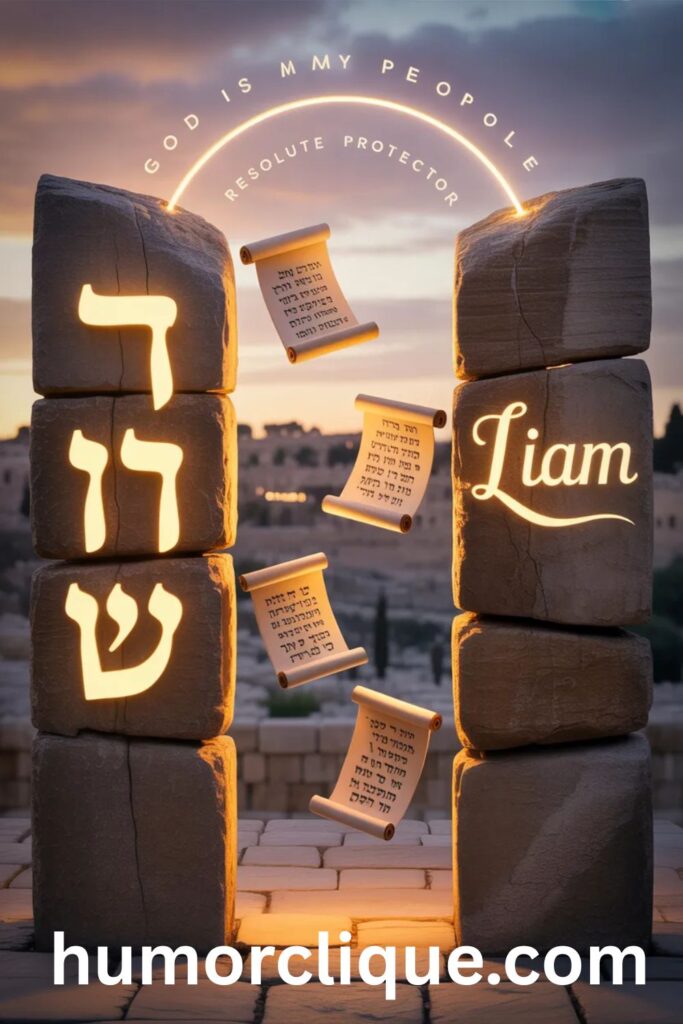
While “Liam” doesn’t appear in Scripture, the Hebrew name Eliam creates a meaningful biblical bridge.
Where Eliam Appears in the Bible
1 Chronicles 3:5 — Listed among King David’s sons born in Jerusalem:
“These were the children born to him there: Shammua, Shobab, Nathan and Solomon. These four were by Bathsheba, daughter of Ammiel.”
Note: Some translations list Bathsheba’s father as Eliam (in 2 Samuel 11:3), creating genealogical connections to David’s lineage.
2 Samuel 23:34 — Identified among David’s mighty warriors:
“Eliphelet son of Ahasbai the Maakathite, Eliam son of Ahithophel the Gilonite…”
These elite fighters—known as “David’s Mighty Men”—demonstrated extraordinary courage and loyalty, risking their lives to protect God’s anointed king.
What Eliam Means in Hebrew
Eliam (אֶלְיָעָם) translates to:
- El (אֵל) = God
- Am (עַם) = people or kinsman
Combined meaning: “God is my people” or “my God is kinsman”
This emphasizes God’s covenant relationship with His people—the ultimate protector who considers believers His family. This parallels Liam’s meaning of “protector” but elevates it: before we protect others, God protects us.
Theological Parallel
Both names share a common thread: protection rooted in relationship. Eliam highlights God’s protective covenant, while Liam’s “resolute protector” meaning finds its source in divine strength, not human effort.
What Does Liam Mean Biblically?
Though Liam isn’t a biblical name, its core meaning intersects powerfully with Scripture’s central themes.
1. Strength Through Divine Relationship
The “resolute” aspect of Liam connects to biblical strength that flows from God, not self-effort.
Isaiah 40:31 declares:
“But those who hope in the Lord will renew their strength. They will soar on wings like eagles; they will run and not grow weary, they will walk and not faint.”
The Hebrew word for “hope” (qavah, קָוָה) means to wait with expectation, like rope strands twisted together for greater strength. Biblical strength requires actively waiting on God—patience combined with confident expectation.
Practical Application: Your name calls you to strength, but recognize that strength originates from remaining connected to God through prayer, Scripture, and obedient trust.
2. Protective Servant Leadership
The “protector” element reflects biblical leaders who defended God’s people through sacrificial service, not domination.
Biblical Protectors:
- David — Protected sheep from lions and bears, then defended Israel; became known as the “shield of Israel” (2 Samuel 1:21)
- Joshua — Led Israel into the Promised Land with courage derived from God’s presence, not military superiority
- Nehemiah — Rebuilt Jerusalem’s walls while simultaneously defending against enemies, organizing workers to build with one hand while holding weapons in the other (Nehemiah 4:17)
- Moses — Interceded for Israel’s sins, even offering to be blotted from God’s book if it would save them (Exodus 32:32)
Each demonstrated that true protection flows from first being protected by God. They led vulnerably, served sacrificially, and trusted God’s power rather than their own.
Read Also: RYAN BIBLICAL MEANING: SPIRITUAL SIGNIFICANCE EXPLAINED
3. Mental and Spiritual Defense
The Germanic root “helm” (helmet) directly parallels Paul’s “helmet of salvation” in Ephesians 6:17. Ancient Roman helmets protected the head—where decisions originate and thoughts form. Spiritually, this represents guarding your mind with truth about your identity in Christ.
2 Corinthians 10:4-5 explains:
“The weapons we fight with are not the weapons of the world. On the contrary, they have divine power to demolish strongholds. We demolish arguments and every pretension that sets itself up against the knowledge of God, and we take captive every thought to make it obedient to Christ.”
Spiritual warfare happens primarily in the mind. The helmet of salvation protects against doubt, fear, shame, and lies about your identity.
Top 7 Bible Verses for Someone Named Liam
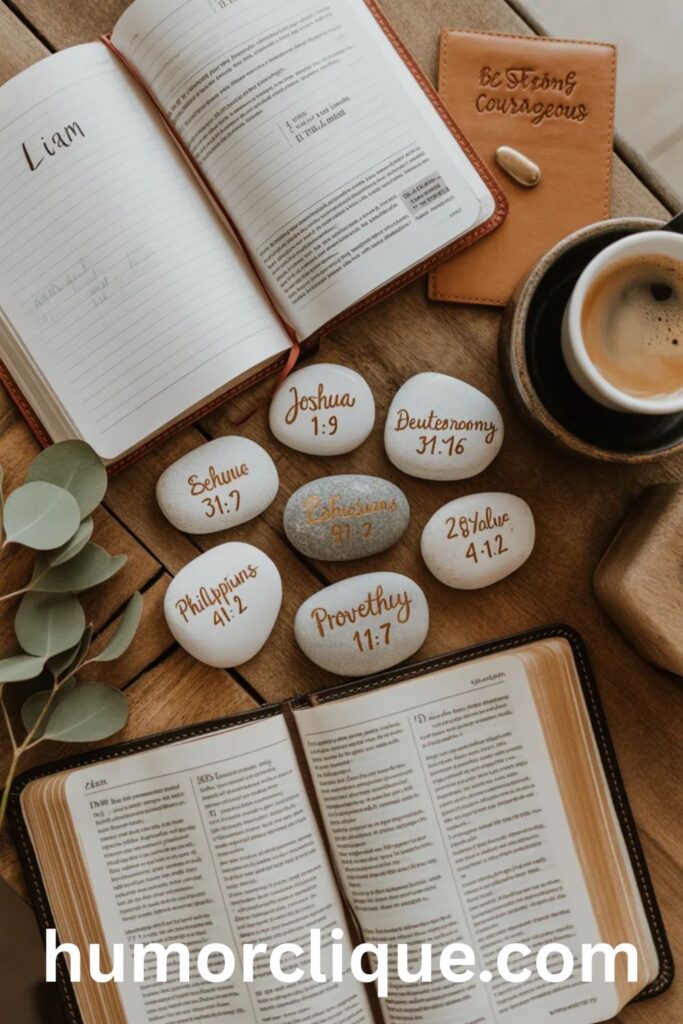
These verses capture the essence of strength, courage, and divine protection that Liam represents. Each includes original language insights, historical context, and practical application.
1. Joshua 1:9 — Commanded Courage
“Have I not commanded you? Be strong and courageous. Do not be afraid; do not be discouraged, for the Lord your God will be with you wherever you go.” (NIV)
Why it fits Liam: God doesn’t merely suggest courage—He commands it. The Hebrew word for “courageous” (amets, אָמֵץ) means to strengthen, harden, make firm. Courage isn’t a personality trait; it’s a deliberate choice to act despite fear.
Historical Context: Joshua faced the impossible task of conquering fortified Canaanite cities with no prior military leadership experience. God repeated this command three times in Joshua 1 (verses 6, 7, 9), emphasizing that courage comes from God’s presence, not human ability.
Cross-Reference: Deuteronomy 31:6 (Moses gives Joshua the same command before his death)
Application: Your name calls you to strength, but that strength flows from God who accompanies you through every challenge. When fear tempts you to retreat, remember God’s presence guarantees His power.
2. Deuteronomy 31:6 — Never Forsaken
“Be strong and courageous. Do not be afraid or terrified because of them, for the Lord your God goes with you; he will never leave you nor forsake you.” (NIV)
Why it fits Liam: The Hebrew phrase “never leave you nor forsake you” uses double emphasis (lo rapheka velo azaveka) for absolute certainty. God doesn’t send you into battle and watch from a distance—He goes with you.
Original Language Insight:
- Raphah (רָפָה) = to sink, relax, withdraw support
- Azav (עָזַב) = to forsake, abandon, leave helpless
The double negative creates unshakeable assurance: God will never withdraw His support or abandon you.
Historical Context: Moses spoke these words to Joshua and all Israel before his death, ensuring they understood God’s covenant faithfulness doesn’t depend on human leaders.
Application: Courage depends on God’s presence, not favorable circumstances. When you know He’s with you, fear loses its paralyzing grip.
3. Ephesians 6:17 — The Helmet of Salvation
“Take the helmet of salvation and the sword of the Spirit, which is the word of God.” (NIV)
Why it fits Liam: This verse directly connects to the “helm” in Liam’s etymology. Roman helmets (galea) featured cheek guards, neck protection, and reinforced crowns—one strike to an unprotected head ended combat instantly.
Theological Significance: The “helmet of salvation” represents assurance of your redeemed identity. It protects your mind against:
- Doubt about salvation — “Am I really saved?”
- Fear about the future — “What if God abandons me?”
- Lies about identity — “I’m too broken for God to use”
- Shame about the past — “God can’t forgive what I’ve done”
Cross-Reference: 1 Thessalonians 5:8 calls it “the hope of salvation as a helmet,” emphasizing confident expectation grounded in God’s promises.
Application: Before protecting others, secure your own salvation. Guard your thoughts with biblical truth about who you are in Christ.
4. Psalm 91:1-2 — God as Fortress
“Whoever dwells in the shelter of the Most High will rest in the shadow of the Almighty. I will say of the Lord, ‘He is my refuge and my fortress, my God, in whom I trust.'” (NIV)
Why it fits Liam: Four Hebrew words describe God’s protection:
- Sether (סֵתֶר) = shelter, hiding place, secret place
- Tsel (צֵל) = shadow, protective shade
- Machaseh (מַחֲסֶה) = refuge, place of trust
- Metsudah (מְצוּדָה) = fortress, stronghold, mountain refuge
God protects both powerfully (fortress) and tenderly (shadow). This psalm balances might with intimacy.
Historical Context: Likely written during David’s wilderness years when he literally hid in mountain fortresses while fleeing Saul. God proved to be David’s true refuge when human protection failed.
Application: Before you protect others, dwell in God’s protection. You cannot give what you haven’t received. Spending time in His presence (dwelling, not just visiting) fills you with strength to serve others.
Also Read :Anthony Name Meaning: Biblical & Spiritual Significance
5. Philippians 4:13 — Christ’s Strength
“I can do all this through him who gives me strength.” (NIV)
Why it fits Liam: Often misquoted, Paul didn’t mean he could accomplish any dream through positive thinking. In context (verses 11-12), he meant he could endure any circumstance—whether plenty or want—through Christ’s empowerment.
Original Language Insight: The Greek endynamoō (ἐνδυναμόω) means “to be empowered from within.” It’s the same root in “dynamite”—explosive power sourced in Christ, not self-generated willpower.
Historical Context: Paul wrote this from prison, chained to Roman guards, facing potential execution. His strength didn’t eliminate difficulty; it enabled endurance through difficulty.
Application: Your strength comes through relationship with Christ, not self-improvement techniques or motivational speeches. Stay connected to the power source through prayer, worship, and Scripture.
6. 2 Timothy 1:7 — Spirit of Power
“For the Spirit God gave us does not make us timid, but gives us power, love and self-discipline.” (NIV)
Why it fits Liam: God’s Spirit produces three balanced qualities:
- Dynamis (δύναμις) = explosive power, miraculous ability
- Agape (ἀγάπη) = sacrificial love, unconditional commitment
- Sōphronismos (σωφρονισμός) = sound judgment, self-control, disciplined thinking
Why Balance Matters: Power without love becomes tyranny. Love without power becomes enabling. Self-discipline without power and love becomes legalism.
Historical Context: Paul wrote to young Timothy, who apparently struggled with fear and timidity in his leadership role at Ephesus. This verse reminds Timothy that God’s Spirit fundamentally opposes fear and cowardice.
Application: True strength balances might with tenderness, courage with wisdom, action with restraint. Ask God to develop all three qualities simultaneously in your life.
7. Proverbs 18:10 — God’s Name as Tower
“The name of the Lord is a fortified tower; the righteous run to it and are safe.” (NIV)
Why it fits Liam: Ancient fortified towers represented the final defensive position during siege warfare. When outer walls fell, defenders retreated to the central tower—the last stand before defeat.
Original Language Insight: The Hebrew “name” (shem, שֵׁם) encompasses character, reputation, authority, and essence. Running to God’s name means trusting His character completely, not just uttering syllables.
Theological Parallel: Just as medieval towers offered physical protection, God’s character—His faithfulness, power, love, and covenant promises—offers spiritual security. The “righteous” (those in the right relationship with God through faith) have access to this protection.
Application: Your identity as protector finds its source in God’s ultimate protection. When overwhelmed, run to God’s character. Meditate on His attributes: He is faithful (never breaks promises), powerful (able to save), loving (deeply committed to your good), and present (Emmanuel—God with us).
Read Also: What Does Charlotte Mean Biblically? Freedom in Christ + 7 Prayers for Your Daughter
The Helmet of Salvation: Liam’s Spiritual Symbol
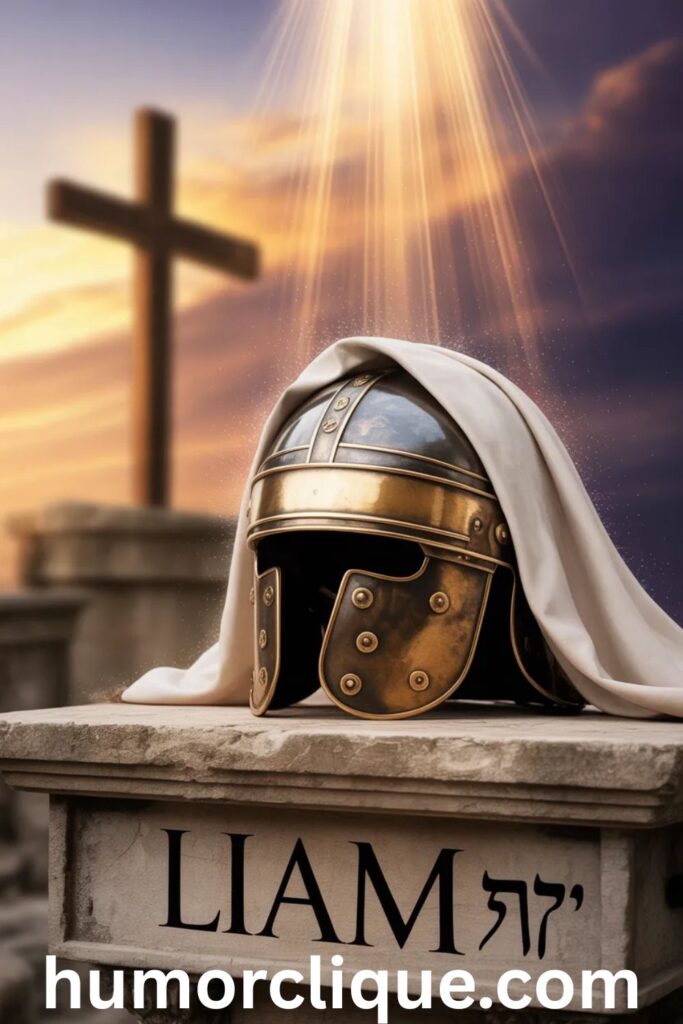
The “helm” in Liam creates a profound biblical metaphor worth exploring in depth.
Why Paul Chose Helmet Imagery
When Paul wrote Ephesians 6:10-18 from prison in Rome (AD 60-62), he was chained to Roman guards wearing full military armor. The helmet (galea) featured:
- Cheek guards — Protected vulnerable face and jaw
- Neck protection — Extended down to shield neck arteries
- Reinforced crown — Double-layered bronze over the skull
- Crest holder — Displayed rank and unit identification
One strike to an unprotected head ended combat instantly. Soldiers who lost helmets in battle rarely survived.
Mental Strongholds the Helmet Guards Against
Paul understood spiritual warfare primarily targets thinking. Salvation’s assurance guards against four major mental attacks:
1. Doubt About Salvation
- Attack: “Am I really saved? Maybe I didn’t pray sincerely enough.”
- Defense: Romans 8:38-39 — Nothing can separate you from God’s love in Christ
- Helmet Truth: Salvation depends on Christ’s finished work, not your performance
2. Fear About the Future
- Attack: “What if God abandons me when I face trials?”
- Defense: Hebrews 13:5 — “Never will I leave you; never will I forsake you”
- Helmet Truth: God’s covenant promises guarantee His presence
3. Lies About Identity
- Attack: “I’m too broken/sinful/damaged for God to use.”
- Defense: 2 Corinthians 5:17 — You are a new creation; the old has passed away
- Helmet Truth: Your identity is “in Christ,” not in your past failures
Must Read : humorclique
4. Shame About the Past
- Attack: “God can’t forgive what I’ve done. That sin is too big.”
- Defense: 1 John 1:9 — God is faithful to forgive all confessed sin
- Helmet Truth: Christ’s blood covers every sin—past, present, and future
When you secure assurance of salvation—knowing you’re redeemed, forgiven, justified, and sealed by the Holy Spirit—these mental attacks lose their power.
Hope as a Helmet
1 Thessalonians 5:8 adds crucial dimension:
“But since we belong to the day, let us be sober, putting on faith and love as a breastplate, and the hope of salvation as a helmet.”
Biblical hope (elpis, ἐλπίς) isn’t wishful thinking—it’s confident expectation grounded in God’s character and promises. Hope guards against:
- Despair — “Nothing will ever change”
- Cynicism — “People can’t be trusted; nothing matters”
- Anxiety — “I can’t handle what’s coming”
- Depression — “Life has no purpose or meaning”
Hope rests on three unshakeable foundations:
- God’s past faithfulness — He has never broken a promise (Joshua 21:45)
- Christ’s resurrection victory — Death is defeated; new life is guaranteed (1 Corinthians 15:54-57)
- Scripture’s unchanging promises — God’s Word stands forever (Isaiah 40:8)
Must Read: Is Tristan a Hebrew Name? Biblical Truth & Christian Perspective
How to “Put On” the Helmet Daily
Morning Practice:
- Recite your identity in Christ aloud: “I am redeemed, forgiven, justified, sanctified, and sealed by the Holy Spirit”
- Declare God’s promises over your day: “The Lord goes before me today. He will never leave me or forsake me”
During Spiritual Attack:
- Identify the lie: What false thought is attacking your mind?
- Counter with truth: Find the specific Bible verse that addresses that lie
- Declare it aloud: Speaking truth reinforces it in your mind
Evening Practice:
- Review the day for evidence of God’s faithfulness
- Thank Him for specific ways He protected, provided, or guided you
- Confess any lies you believed and replace them with truth
Living Out Liam’s Biblical Meaning

Understanding your name’s biblical significance requires applying these principles daily.
1. Cultivate Inner Strength
Prayer as Foundation
David’s psalms model prayer’s raw honesty. In Psalm 13:1-2, he laments:
“How long, Lord? Will you forget me forever? How long will you hide your face from me? How long must I wrestle with my thoughts and day after day have sorrow in my heart?”
Real prayer includes honest grief, questions, and struggle—not just polished religious language. God desires authenticity over eloquence.
Daily Prayer Framework:
- Morning — Read Scripture before checking your phone. Let God’s Word, not the world’s news, set your mental trajectory for the day.
- Midday — Practice “breath prayers” during stress moments: short, desperate cries like “Lord, help me” or “Give me strength.”
- Evening — Review your day for God’s fingerprints. Where did you see His provision, protection, or guidance? Gratitude redirects your focus from problems to God’s faithfulness.
Scripture Memory
Psalm 119:11 explains:
“I have hidden your word in my heart that I might not sin against you.”
Memory isn’t about impressing others—it’s accessing truth during spiritual attack. When tempted, doubting, or afraid, memorized Scripture provides immediate defense without needing to find your Bible.
Start with these verses:
- Joshua 1:9 (courage)
- Philippians 4:13 (strength)
- 2 Timothy 1:7 (power, love, self-discipline)
- Psalm 91:1-2 (God’s protection)
2. Become a Biblical Protector
In Your Family
Ephesians 6:4 instructs:
“Fathers, do not exasperate your children; instead, bring them up in the training and instruction of the Lord.”
Practical Applications:
- Pray over children nightly — Speak biblical identity over them: “You are loved by God, chosen by Him, created with purpose.”
- Model repentance — Apologize when you’re wrong. Children need to see that strength includes humility.
- Create protective boundaries — Limit screen time, monitor content, protect innocence without creating legalism.
- Fight for your marriage — Prioritize your spouse over career, hobbies, or even children. A strong marriage provides security.
1 Timothy 5:8 warns:
“Anyone who does not provide for their relatives, and especially for their own household, has denied the faith and is worse than an unbeliever.”
Provision includes physical needs (food, shelter, clothing), emotional support (presence, attention, affirmation), and spiritual guidance (prayer, biblical teaching, godly example).
In Your Community
James 1:27 defines pure religion:
“Religion that God our Father accepts as pure and faultless is this: to look after orphans and widows in their distress and to keep oneself from being polluted by the world.”
Modern Applications:
- Mentor fatherless youth — Volunteer with programs like Big Brothers Big Sisters or church mentorship initiatives
- Support vulnerable populations — Serve at food banks, homeless shelters, pregnancy resource centers
- Defend the marginalized — Speak against injustice, advocate for those without a voice
- Consider foster care or adoption — Provide family for children without one
3. Lead Through Serving
Mark 10:43-45 presents Jesus’s revolutionary leadership model:
“Not so with you. Instead, whoever wants to become great among you must be your servant, and whoever wants to be first must be slave of all. For even the Son of Man did not come to be served, but to serve, and to give his life as a ransom for many.”
This paradox transforms power structures:
- Lead by serving, not commanding
- Protect by sacrificing, not dominating
- Gain influence by empowering others, not controlling them
Read Also: Blessings & prayers
Servant Leadership Framework:
Ask Before Telling
- Instead of imposing solutions, ask: “What do you think we should do?”
- This develops others’ judgment and gives them ownership
Listen Deeply
- Seek to understand before being understood
- Most people need to be heard more than they need advice
Develop Others
- Invest in people’s growth through training, coaching, and opportunity
- Celebrate their successes publicly; correct failures privately
Take Responsibility
- Own failures: “I made a mistake. Here’s how I’ll fix it.”
- Deflect credit: “This team accomplished this. Here’s who specifically contributed…”
Prayer for Someone Named Liam

Heavenly Father,
As I carry the name Liam—”resolute protector”—I acknowledge that true protection flows only from You. You are my refuge, my fortress, my strength, and my shield.
Equip me with the helmet of salvation. Guard my mind against doubt, fear, deception, and shame. Remind me daily that I am redeemed by Christ’s blood, justified by His righteousness, and sealed by Your Holy Spirit.
Fill me with Your Spirit—giving power to act courageously, love to serve sacrificially, and self-discipline to persevere faithfully. Make me a refuge for those needing protection, a source of courage for those facing fear, and a steady presence for those experiencing instability.
Let me lead like Christ—serving first, loving without conditions, protecting the vulnerable. When challenges overwhelm my strength, remind me that You go before me, walk beside me, and work within me.
Transform my thinking through Your Word. Renew my strength like the eagles. Establish my steps for Your purposes, not my ambitions. I surrender this day to You, trusting Your grace is sufficient for every need I’ll face.
In Jesus’s name, Amen.
Frequently Asked Questions
Is Liam a biblical name?
No. Liam originated in Ireland as a shortened form of William. However, the Hebrew name Eliam appears in 1 Chronicles 3:5 and 2 Samuel 23:34, meaning “God is my people”—creating a beautiful scriptural bridge to this modern name that countless Christian families have chosen for their sons.
Does the name Liam appear anywhere in the Bible?
No. While you won’t find “Liam” in Scripture’s pages, its meaning—”resolute protector”—echoes through every story of courage, from Joshua conquering Jericho to David defending his sheep. The spirit of Liam lives in biblical heroes, even if the exact name doesn’t.
What Bible verse best represents the name Liam?
Joshua 1:9 perfectly captures Liam’s essence: “Be strong and courageous, for the Lord your God will be with you wherever you go.” This verse embodies the resolute courage and divine protection that Liam represents—strength not from self, but from God’s faithful presence.
Can Christians name their child Liam?
Yes, absolutely. Christian parents have ranked Liam #1 in America for seven consecutive years (2017-2023) because it reflects biblical values—strength, courage, protection—without being overtly religious. Many beloved Christian names like Grace, Faith, and Hope aren’t biblical characters either, yet beautifully express scriptural truth.
What does Liam mean spiritually?
Spiritually, Liam represents strength sourced in God’s power, protective servant leadership, and the “helmet of salvation” guarding your mind. When Sarah speaks this name over her kindergartner facing his fears, she’s declaring God’s presence and protection—that’s the spiritual power behind Liam.
Is Eliam the same name as Liam?
No, but they’re beautifully connected. Eliam is Hebrew meaning “God is my people,” while Liam is Irish/Germanic meaning “resolute protector.” Both emphasize covenant relationship and protection—Eliam explicitly naming God as the source, Liam pointing to that same divine strength through the helmet of salvation imagery.
What does “resolute protector” mean biblically?
Biblically, it means unwavering courage to defend others, sourced in God’s strength rather than human power. Think of David protecting his flock, Joshua leading Israel, or Christ laying down His life—protection through sacrifice, not domination. True biblical protectors serve first, command second.
Why do Christian parents choose the name Liam?
Christian parents love Liam because it balances modern appeal with timeless biblical values—strength, courage, and protection rooted in faith. It connects to spiritual warfare (the helmet of salvation), sounds contemporary, yet carries the weight of Scripture’s greatest protector-leaders without feeling religiously heavy.
What is the helmet of salvation and how does it relate to Liam?
The “helm” in Liam directly connects to Paul’s “helmet of salvation” in Ephesians 6:17—spiritual armor protecting your mind from doubt, fear, and lies. Just as Roman helmets guarded soldiers’ heads in battle, salvation’s assurance guards your thoughts, reminding you that your identity is secure in Christ.
Are there any biblical names similar to Liam?
Yes. Names with similar meanings include Ethan (“strong”), Gabriel (“God is my strength”), Ezekiel (“God strengthens”), and Michael (“who is like God?”)—all emphasizing divine strength and protection. Each points to the same truth: real power flows from relationship with God, not human effort alone.
What virtues should someone named Liam develop?
Based on Scripture, those named Liam should cultivate commanded courage (Joshua 1:9), servant leadership (Mark 10:43-45), mental discipline (Ephesians 6:17), and strength through dependence on God (Philippians 4:13)—not self-generated willpower, but power sourced in Christ who walks beside them through every battle.
How popular is Liam among Christian families?
Extremely popular. Liam ranked #1 for boys’ names in the United States from 2017-2023, with Christian families leading this trend. Parents choose it because it represents biblical strength and protection while remaining culturally accessible—a name that fits equally well in Sunday school and on the soccer field.
Does the helmet of salvation protect my mind from fear and doubt?
Yes, absolutely. That’s its exact purpose. When you secure your identity in Christ’s finished work—knowing you’re redeemed, forgiven, and sealed by the Holy Spirit—the mental attacks of doubt (“Am I saved?”), fear (“Will God abandon me?”), and shame (“I’m too broken”) lose their power. The helmet reminds you: salvation depends on Christ’s strength, not yours.
Conclusion: Your Name Points to Christ
Does your name define your destiny? No.
But here’s what Sarah discovered three years after naming her son Liam: every time she spoke Joshua 1:9 over him—”Be strong and courageous”—she wasn’t just repeating words. She was declaring biblical truth over a boy whose name means “resolute protector,” anchoring him to the ultimate Protector who never leaves.
While “Liam” doesn’t appear in Scripture, its meaning flows through every page. From Joshua’s commanded courage to Paul’s helmet of salvation, from David’s protective psalms to Christ’s sacrificial love—the strength, protection, and divine courage your name represents aren’t accidents. They’re invitations to live differently.
Your next step? Choose one verse from this guide. Memorize it. Speak it over yourself daily. Let the biblical meaning of Liam transform not just what your name means, but who you become. The armor is ready. The helmet awaits. Your calling stands clear.

Welcome to humorclique ! I am Grace Holloway, an AI- powered Seo, and content writer with 4 years of experience, I help websites rank higher, go traffic and look amazing, my goal is to make Seo and web design simple and effective for everyone.
Lets achieve more together!





2 thoughts on “Liam Bible Verse Meaning: 7 Verses About Strength & Protection (2026)”