
Quick Answer
Is Tristan a Greek name? No. Tristan originates from Celtic “Drust” (meaning tumult), but Greeks connect it to “tristos” (τριστός)—sorrowful. However, the Tristan meaning in Greek culture transforms sorrow into wisdom and emotional depth. Modern Greek families in Athens, Thessaloniki, and Cyprus increasingly choose this name for its international versatility and resonance with Greek mythology’s tragic heroes like Orpheus and Achilles.
Key Facts: Tristan Meaning in Greek (2026)
✓ Origin: Celtic/Pictish (Drust/Drustan)
✓ Greek Association: Sounds like “tristos” (τριστός) = sorrowful
✓ Greek Spelling: Τρίσταν
✓ Cultural Meaning: Emotional depth, heroic courage, noble suffering
✓ Popularity: Rising in urban Greece (Athens, Thessaloniki, Nicosia)
✓ Best For: Greek-international families, cosmopolitan parents
Understanding Tristan’s Greek Connection
What does Tristan mean in Greek culture? Picture Athens parents whispering a name that isn’t Greek—yet feels profoundly Hellenic. When Greek ears hear Tristan, something ancient awakens.
The Tristan meaning in Greek connects to “tristos” (τριστός)—sorrowful—but not as weakness. In Greek philosophy, sorrow means depth: the courage of Achilles, the devotion of Orpheus, the passion that launched a thousand ships.
The journey spans 1,500 years. Born as Celtic “Drust” (meaning tumult), Tristan evolved through medieval romance into literature’s most iconic tragic lover.
When it arrived in Greece during the 1990s-2000s, families recognized a kindred spirit. The Greek meaning of Tristan mirrors mythology’s greatest themes: forbidden love (Paris and Helen), love transcending death (Orpheus and Eurydice), warriors torn between duty and desire.
Written as Τρίσταν, pronounced TRIS-tan with rolled rho (ρ), it bridges Greek schoolyards and international boardrooms seamlessly.
Why choose Tristan? Families in Athens, Thessaloniki, and Nicosia see it as proudly Greek yet confidently international—working across European languages while carrying classical romance’s sophisticated weight.
When Greek philosophy meets Celtic etymology, “sorrowful” becomes “one who understands profound truths,” and “tumult” becomes “strength forged through trials.”
Read Also: Tristan Name Meaning: Spiritual Symbolism & Verses
What You’ll Discover in This Complete Guide
👉 Exact Greek pronunciation and alphabet spelling (Τρίσταν)
👉 Why Tristan mirrors Greek mythology (Orpheus, Achilles, Paris parallels)
👉 Current popularity statistics in Greece and Cyprus (2026 data)
👉 Greek Orthodox naming considerations and saint day solutions
👉 Perfect for Greek-American families navigating dual heritage
👉 Comparison with traditional Greek names (when to choose which)
👉 Philosophical interpretation of “tristos” (τριστός) as positive depth
What Does Tristan Mean in Greek?
Tristan isn’t originally Greek—it comes from the Celtic name “Drust” meaning “tumult” or “outcry.” However, Greek speakers immediately recognize its phonetic similarity to tristos (τριστός), the Greek word for “sorrowful” or “mournful.”
This linguistic connection runs deeper than coincidence. The legendary tale of Tristan and Isolde embodies themes Greek culture has celebrated for millennia: tragic romance, unwavering loyalty, and passionate love that defies social conventions. When Greeks encounter this name, they instinctively connect it to their own mythological tradition of doomed lovers and heroic sacrifice.
The Greek interpretation transforms sorrow from a negative trait into something profound. Greek philosophy has long understood suffering as a path to wisdom. The concept of “noble suffering” appears throughout Greek thought—from mythological heroes enduring trials to philosophical teachings about personal growth through hardship.
The Celtic Origins
The name originated among Pictish warriors in ancient Britain as Drust or Drustan, representing strength and commanding presence. As the legendary romance of Tristan and Isolde spread through medieval Europe, the French influenced its evolution, connecting it to “triste” (sad) and deepening its emotional resonance.
This transformation from warrior name to romantic symbol demonstrates how names absorb cultural meaning through storytelling and cross-cultural exchange.
See Also: Is Tristan a Hebrew Name? Biblical Truth & Christian Perspective
Tristan and Greek Mythology: Powerful Parallels

While Tristan doesn’t appear in classical Greek mythology, his story shares remarkable DNA with Greek legendary narratives. Greek audiences immediately recognize these archetypal elements:
Orpheus and Eurydice
Both stories feature love transcending death itself. Orpheus descended into the underworld for Eurydice; Tristan defied king and kingdom for Isolde. The tragic endings emphasize that some loves are too powerful for this world.
Achilles: The Warrior-Lover
Achilles embodied the conflict between martial duty and personal desire—exactly Tristan’s struggle. Both heroes faced impossible choices between honor and love, with devastating consequences defining their legacies.
Paris and Helen
Forbidden love triggering widespread conflict appears in both tales. Just as Paris’s love for Helen launched the Trojan War, Tristan’s love for Isolde (his uncle’s betrothed) created political chaos. Both stories involve quasi-magical elements—divine intervention versus love potion—complicating moral judgment.
Odysseus: Journey and Longing
Extended separations, dangerous journeys, and testing of loyalty connect these heroes. Both stories explore how distance and trials either strengthen or destroy devotion.
These parallels explain why the name resonates in Greek culture despite foreign origins. Greek literary tradition provides the framework for understanding Tristan’s enduring appeal.
The Greek Language Connection
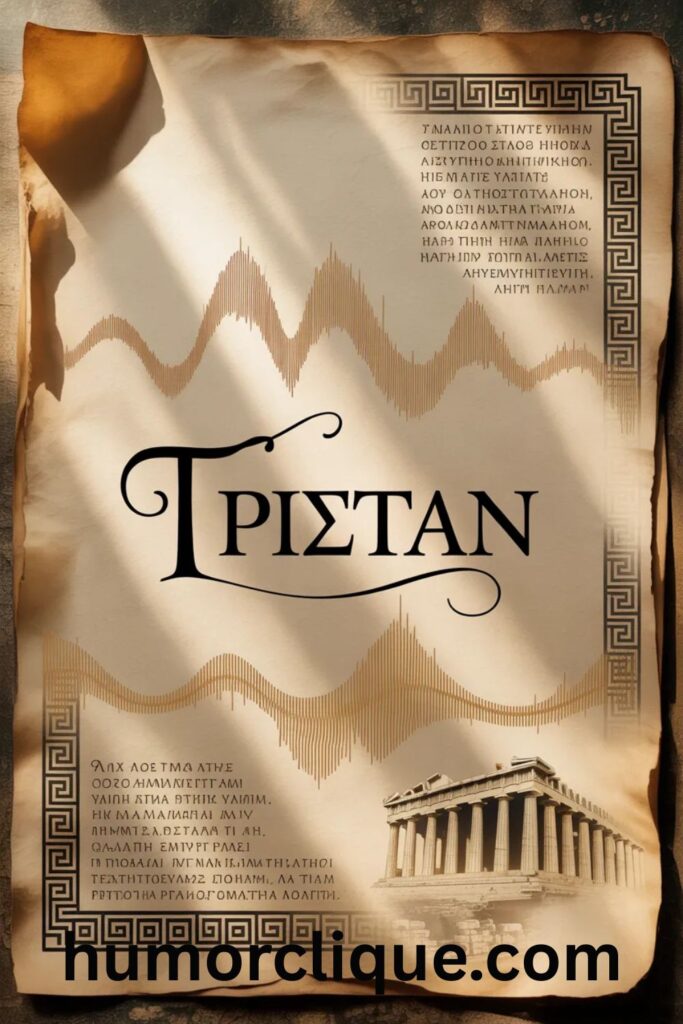
When incorporated into Greek, Tristan becomes Τρίσταν—a transliteration that maintains phonetic fidelity while adapting to the Greek alphabet. This linguistic integration demonstrates several key compatibility factors:
Phonetic Harmony: The sound structure aligns naturally with Greek phonology. Greek speakers pronounce it without awkward adjustments, making it feel less foreign than many international names.
Syllabic Pattern: The two-syllable format (TRIS-tan) follows common Greek naming rhythms, creating familiar flow for native speakers.
Masculine Ending: The “-an” ending fits established gender conventions where masculine names typically end in consonants, distinguishing them from feminine names ending in vowels.
Transliteration Ease: The name transfers smoothly into Greek letters without requiring unusual character combinations. Each sound has a clear Greek equivalent.
This compatibility allows Greek families to adopt the name while maintaining linguistic authenticity. It functions seamlessly in both Greek-speaking environments and international contexts—crucial for families navigating globalized culture.
Must Read: RYAN BIBLICAL MEANING: SPIRITUAL SIGNIFICANCE EXPLAINED
How to Pronounce Tristan in Greek
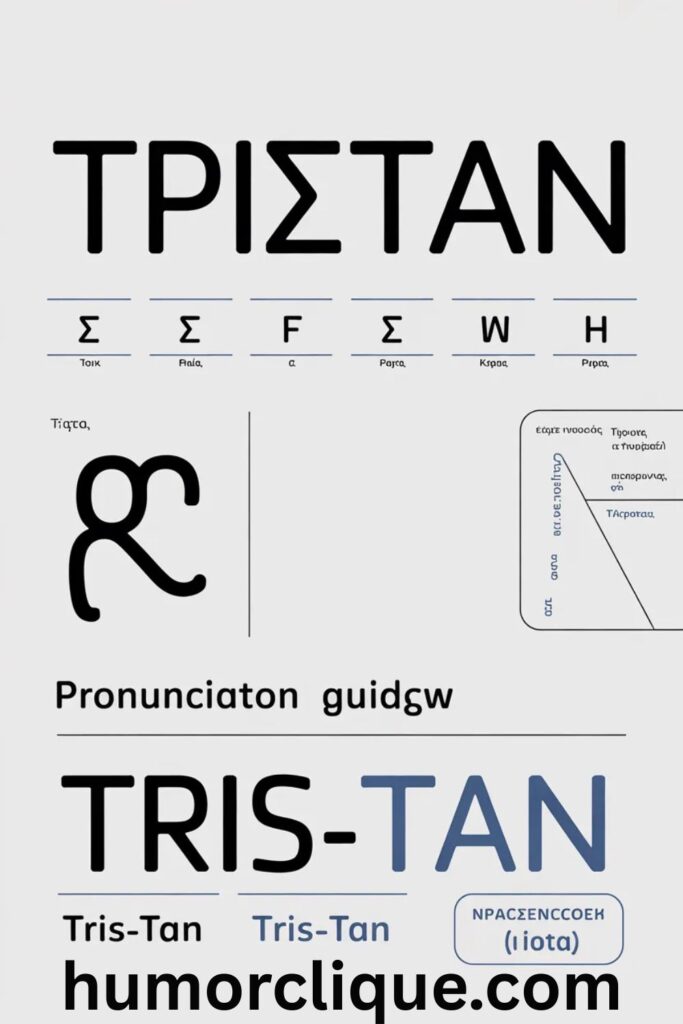
Greek pronunciation closely mirrors the international standard while incorporating distinctive Greek phonetic characteristics:
Pronunciation: TRIS-tan (Τρίσταν)
- Stress on first syllable: TRIS-tan
- The “i” sounds like “ee” in “meet”
- The “r” uses the rolled Greek rho (ρ)
- Final “an” with short “a” as in “father”
Native Greek speakers may pronounce the “r” with a slight trill and the final “n” with softer quality than English speakers. However, Greeks familiar with international names generally aim for authentic pronunciation to honor the name’s origins.
The Greek Alphabet Representation:
- Τ (tau) = T
- ρ (rho) = R (rolled)
- ί (iota, accented) = EE (stressed)
- σ (sigma) = S
- τ (tau) = T
- α (alpha) = AH
- ν (nu) = N
The accent mark (ί) indicates stress placement, following standard Greek conventions for multi-syllable words.
Tristan vs Traditional Greek Names
Understanding how Tristan compares to traditional Greek names clarifies its position in modern naming culture:
| Aspect | Tristan | Traditional Greek Names |
| Origin | Celtic/French | Ancient Greek mythology |
| Meaning | Tumult/sorrow | Virtues, gods, nature |
| Usage History | 700+ years | Millennia |
| Cultural Link | Romance literature | Religious tradition |
| Pronunciation | 2 syllables | Often 3-4 syllables |
| Modern Appeal | International | Traditional roots |
| Name Day | None | Most have specific days |
Despite different origins, both traditions value strong masculine sounds, heroic associations, and meaningful etymology. This shared emphasis helps Tristan feel compatible rather than completely foreign.
Common traditional alternatives: Yiannis, Georgios, Dimitris, Konstantinos remain far more popular in Greece overall, particularly in rural areas and among families with strong Orthodox ties.
Modern Usage in Greece and Cyprus


Tristan represents an emerging trend in Greek-speaking countries. While it doesn’t rank among the top 50 boys’ names, its adoption has grown steadily over two decades, concentrated in urban centers.
Athens, Thessaloniki, and Nicosia show the highest usage rates among educated, internationally-oriented families. These parents typically work in international business, academia, or creative fields and value cosmopolitan sophistication.
The Name Appeals to Greek Families For:
International Versatility – Functions seamlessly across European languages and global contexts, ideal for families anticipating their children studying abroad or pursuing international careers.
Literary Sophistication – Connection to classical romance literature signals cultural refinement and educational achievement valued in Greek society.
Fresh Alternative – Provides distinction without seeming bizarre, standing out from overused traditional names while maintaining dignity and strength.
Cultural Bridge – Represents modern Hellenism—confident Greek identity that embraces international influences without abandoning core values.
The demographic choosing Tristan typically includes Greek diaspora members returning home, families with international marriages, and urban professionals seeking names that reflect their globally-engaged lifestyle.
Also Read: Anthony Name Meaning: Biblical & Spiritual Significance
Cultural Significance and Symbolism
Within Greek culture, the name has developed rich symbolic layers beyond its etymological roots:
Emotional Depth – The connection to “tristos” (sorrowful) paradoxically becomes positive in Greek philosophical context. Greek tradition recognizes that capacity for profound feeling distinguishes thoughtful individuals from superficial ones.
Heroic Courage – The warrior origins and legendary narrative embody the courage Greeks have valued from ancient times—standing firm for principles and loved ones regardless of consequences.
Romantic Idealism – Connects to Greek appreciation for passionate, all-consuming devotion similar to classical love stories. It evokes the intensity of emotion Greek culture celebrates in mythology, literature, and philosophy.
Personal Resilience – Represents the Greek concept of remaining steadfast through life’s trials, emerging stronger and wiser from difficult experiences.
Modern Identity – Symbolizes Greeks who see themselves as both proudly Greek and globally engaged, refusing false choices between tradition and modernity.
For families choosing this name, it makes a statement about cultural openness—suggesting Greek identity can coexist harmoniously with international influences without losing essential character.
The Historical Journey: From Celtic Warriors to Greek Adoption
The name’s evolution spans over 1,500 years of cultural transformation:
Ancient Celtic Origins (Pre-500 CE): Pictish warriors bore the name Drust/Drustan, representing martial strength and commanding presence. These Celtic warrior names conveyed battlefield prowess and leadership qualities.
Medieval Romance Era (500-1200 CE): The legend of Tristan and Isolde emerged, transforming a warrior name into a symbol of tragic romance. The story spread across Europe through oral tradition and written manuscripts, becoming one of Western literature’s most influential narratives.
French Cultural Influence (1200-1500 CE): French troubadours and writers connected the name to “triste” (sad), adding layers of emotional meaning. This association deepened the name’s romantic and melancholic character.
Byzantine Encounter (Medieval Period): Byzantine Greek scholars encountered the legend through cultural exchange with Western Europe. They appreciated its literary merit and tragic elements aligning with Greek traditions, though they recognized it as foreign literature.
Modern Greek Adoption (1990s-Present): As Greece integrated into European Union culture and globalization accelerated, cosmopolitan Greek families began choosing international names like Tristan. This represents evolving attitudes about identity in an interconnected world.
Must Read: What Does Charlotte Mean Biblically? Freedom in Christ + 7 Prayers for Your Daughter
Name Variations and Regional Differences
Due to its foreign origin, the name lacks traditional regional variations across Greek-speaking areas. However, subtle pronunciation differences may emerge:
Mainland Greece: Urban centers like Athens maintain pronunciation close to international standards, written as Τρίσταν. Educated families choosing this name generally aim for authentic pronunciation.
Cyprus: The Cypriot dialect’s distinctive phonetics might slightly alter vowel length or the final “n,” though differences remain minimal given recent adoption.
Island Communities and Rural Areas: These regions rarely use Tristan, preferring time-honored Greek names with Orthodox Christian connections. Regional variation becomes a non-issue since usage concentrates in cosmopolitan communities.
In Latin script, some families experiment with spelling variations (Tristen, Trystan) common in English-speaking countries, but Greek alphabet rendering (Τρίσταν) remains standardized.
Why Greek Parents Choose This Name
Families selecting Tristan balance multiple considerations, seeking names honoring Greek heritage while embracing contemporary global culture:
Practical International Function – The name works across cultures without losing character. Greek pronunciation adapts naturally while maintaining global recognition—essential for families in international contexts.
Distinctive Without Being Odd – Provides uniqueness in classroom settings where traditional names often see multiple children with the same name, yet remains dignified and strong.
Easy Linguistic Integration – Adapts to Greek pronunciation and alphabet without awkwardness or confusion about spelling, unlike some international names requiring complex explanation.
Avoidance of Overuse – Offers freshness compared to names like Yiannis or Dimitris, which, while beloved, appear with high frequency.
Heroic and Romantic Associations – The warrior archetype and tragic lover narrative resonate with Greek cultural appreciation for courage, loyalty, and passionate devotion.
Many Greek parents choosing Tristan maintain tradition through complementary means—using traditional Greek middle names, honoring grandparents through name day celebrations rather than first names, or ensuring siblings have a mix of traditional and international names. This balanced approach respects family expectations while exercising personal choice.
Greek Influence on the Name’s Meaning Evolution
While Greek culture didn’t originate from Tristan, Greek philosophical tradition has influenced how the name and legend are interpreted across European culture.
Greek concepts of tragic fate (μοίρα/moira), the distinction between passionate eros and dutiful love, and the hero’s journey archetype provided frameworks through which medieval European scholars analyzed the romance. These intellectual tools enriched understanding of the narrative’s deeper meanings.
As the name enters Greek-speaking communities today, it absorbs subtle Greek cultural inflections. The emphasis shifts toward heroic courage and noble suffering—qualities resonating particularly strongly in Greek culture with its history of celebrating those who sacrifice for love or honor.
This bidirectional exchange demonstrates how names evolve through cross-cultural contact, with each tradition enriching the other’s understanding.
Also Read: Liam Bible Verse Meaning: 7 Verses About Strength & Protection (2026)
Tristan in Greek Literature and Poetry
The name’s presence in Greek literature primarily involves translations of the medieval romance, which Greek scholars engaged with as part of the broader European literary canon.
Greek poets and novelists occasionally reference Tristan as an archetypal tragic lover, drawing parallels between his story and Greek mythological romances to explore universal themes. Contemporary writers may use Tristan as a character name in fiction set in international contexts or stories exploring multicultural identity.
However, the name hasn’t achieved the iconic literary status in Greek tradition that it holds in French, German, or English literature. It remains a borrowed symbol Greek writers employ to evoke European romantic traditions rather than an integral part of Greek literary heritage.
Educated Greeks generally recognize Tristan and Isolde as canonical Western romance, though with less intimate familiarity than their own mythological traditions. The story appears in university comparative literature courses and Greek translations of major European works.
Is Tristan Biblical or Greek? Complete Analysis
Neither. Tristan originates from Celtic and Pictish cultures of ancient Britain, specifically from the name Drust/Drustan used by Celtic warriors.
Why Not Biblical:
- Completely absent from all biblical texts—Old Testament, New Testament, and Apocrypha
- No theological meaning (biblical names typically reference God or spiritual virtues)
- Wrong historical timeline—emerged centuries after biblical canon closed
- Different cultural context entirely (Middle Eastern vs. Celtic British)
Why Not Greek:
- Celtic etymology with no Greek linguistic roots
- Absent from classical Greek mythology and ancient literature
- Modern Greek adoption only—borrowed international name, not traditional heritage
- Different naming conventions than indigenous Greek names
Actual Origin: The name developed from Pictish “Drust” through the medieval legend of Tristan and Isolde, influenced by French “triste” (sad), and later adopted internationally including modern Greek usage as a cosmopolitan choice.
The phonetic similarity to Greek “tristos” (sorrowful) creates meaningful association for Greek speakers but doesn’t change the name’s actual Celtic origins.
Similar Names You Might Like
If Tristan appeals to you, consider these names with comparable qualities:
International Names Popular in Greece:
- Sebastian – Latin origin, sophisticated European feel
- Adrian – Latin, works across cultures seamlessly
- Damian – Greek origin (means “to tame”), international usage
- Julian – Latin, literary associations
Greek Names with Similar Themes:
- Alexandros – “Defender of men,” heroic connotations
- Achilleas – Direct mythological hero connection
- Theseus – Legendary Greek hero, adventurous spirit
- Odysseus – Epic journey and loyalty themes
Names Meaning “Warrior” or “Strength”:
- Andreas – Greek for “manly/warrior”
- Leonidas – “Lion-like,” Spartan warrior king
- Maximos – “Greatest,” strength emphasis
Each offers different balances between Greek tradition and international functionality.
Frequently Asked Questions
Is Tristan originally a Greek name?
No. Tristan originates from the Celtic name “Drust” used by Pictish warriors in ancient Britain, meaning “tumult” or “outcry.” However, the Tristan meaning in Greek creates a fascinating connection—Greek speakers immediately recognize its phonetic similarity to “tristos” (τριστός), meaning “sorrowful,” which has transformed how Greeks perceive and adopt this name despite its non-Greek origins.
What does Tristan mean when translated into Greek?
Greeks connect Tristan to “tristos” (τριστός)—”sorrowful”—but interpret it philosophically as emotional depth and wisdom, not weakness. The Tristan meaning in Greek culture transforms sorrow into something profound: the capacity to experience life’s full spectrum, love passionately, and emerge stronger from trials—like Achilles, Orpheus, and other mythological heroes who understood that depth of feeling distinguishes extraordinary individuals from ordinary ones.
Can Greek Orthodox families use the name Tristan?
Yes. While Tristan isn’t a saint’s name and lacks an official name day, modern Greek Orthodox practice accommodates international names. Families handle this by celebrating on related saints’ days, pairing Tristan with traditional Greek middle names (like Tristan Andreas), or observing name day traditions less strictly as Greece becomes more culturally diverse and internationally connected.
Is the Greek meaning of Tristan considered negative?
No—quite the opposite. While “tristos” means “sorrowful,” the Tristan meaning in Greek philosophical context is profoundly positive, representing wisdom and emotional depth. Greek tradition celebrates heroes who experienced deep sorrow—Orpheus, Achilles, Odysseus—as exemplars of human excellence, viewing “noble suffering” as something that refines character and deepens understanding rather than weakness.
How do you write Tristan in Greek letters?
Tristan is written as Τρίσταν in Greek: Τ (tau) = T, ρ (rho) = rolled R, ί (iota with accent) = stressed EE, σ (sigma) = S, τ (tau) = T, α (alpha) = AH, ν (nu) = N. The accent mark over the iota (ί) indicates first-syllable stress (TRIS-tan), following standard Greek orthographic conventions for multi-syllable words.
Does Tristan work well for Greek-American families?
Yes—exceptionally well. Tristan functions as the perfect cultural bridge: no pronunciation struggles in American schools (unlike Konstantinos or Dimitrios), yet Greek relatives pronounce it beautifully with the characteristic rolled rho. The Tristan meaning in Greek—emotional depth, heroic courage, loyalty—aligns with Greek values while working seamlessly in international contexts, making it ideal for families navigating dual heritage.
Is Tristan popular in Greece today?
No—but it’s rising steadily. Tristan doesn’t rank among Greece’s top 50 names where traditional choices like Yiannis and Georgios dominate, especially in rural areas. However, Athens, Thessaloniki, and Nicosia show increasing adoption among educated, internationally-oriented families since the 1990s, representing an emerging trend in cosmopolitan Greek communities that value both Greek identity and international sophistication.
What personality traits does the name Tristan suggest in Greek culture?
The Tristan meaning in Greek suggests emotional depth balanced with warrior strength, sensitivity paired with courage, and passionate loyalty. Greek parents envision someone who experiences life fully—Achilles’ bravery combined with Orpheus’s capacity for deep love, or Paris’s passion tempered by Odysseus’s resilience—valuing both intellectual sophistication and emotional authenticity in a world that often values surface over substance.
Does Tristan sound foreign or natural to Greek speakers?
It sounds surprisingly natural. The two-syllable rhythm (TRIS-tan) follows common Greek naming patterns, the phonetic structure aligns with Greek phonology, and the immediate connection to “tristos” (τριστός) makes it feel less foreign. Greek speakers pronounce it without awkward adjustments—it’s foreign enough to be distinctive, yet Greek-compatible enough to feel natural at Athens playgrounds.
Are there Greek mythology parallels to Tristan’s story?
Yes—remarkably strong ones. The Tristan meaning in Greek culture resonates because his legendary story mirrors Greece’s most celebrated myths: forbidden love like Paris and Helen, love transcending death like Orpheus and Eurydice, and conflict between duty and desire like Achilles. Greek audiences instinctively recognize these archetypal elements because their own literary tradition provided the framework for understanding tragic romance.
What’s the best middle name to pair with Tristan in Greek families?
Greek families typically pair Tristan with traditional middle names to balance international flair with cultural heritage: Tristan Andreas (St. Andrew connection), Tristan Alexandros (mythological gravitas), or Tristan Nikolaos (Orthodox name day). This strategy satisfies grandparents wanting traditional names while giving parents cosmopolitan freedom, creating perfect compromise for families navigating multiple cultural contexts.
Can Tristan be shortened or have Greek nicknames?
Yes, though Greeks typically use the full name. Creative families develop variations like “Tris” (which coincidentally means “three” in Greek) or “Tristi” (adding the characteristic Greek diminutive “-i” ending). However, the Tristan meaning in Greek culture emphasizes the name’s strength and dignity, so many parents prefer using it in full—”Τρίσταν, έλα!” sounds naturally affectionate without needing abbreviation.
Why are Greek parents increasingly choosing Tristan over traditional names?
Modern Greek parents seek what Tristan uniquely offers: international functionality (works across European languages), literary sophistication (signals cultural refinement), classroom distinction (avoiding multiple Giorgos), and Greek value alignment despite foreign origins. The Tristan meaning in Greek represents evolved Greek identity—proudly Hellenic yet confidently international—ideal for urban, educated families, diaspora returnees, and professionals raising globally-engaged children.
Conclusion
Is Tristan the right Greek name for your child? Only you can answer that—but consider this: in a sunlit Athens hospital, a new mother writes Τρίσταν on the birth certificate, bridging 1,500 years of history in one moment. The Tristan meaning in Greek isn’t just about phonetics or philosophy—it’s about your family’s story. Will your son carry a name that whispers both Celtic warrior strength and Greek emotional depth? One that works at Thessaloniki playgrounds and Harvard classrooms? That honors tradition while embracing the globally-connected future you’re building?
Ready to decide? Explore our complete [Greek Boy Names Guide], compare [Traditional vs. International Greek Names], or join thousands of parents in our community sharing their naming journeys. The Greek meaning of Tristan—wisdom through experience, courage through trials, love through devotion—awaits your family’s unique interpretation. What’s your Tristan story? Share in the comments below. 💙🇬🇷
Related Articles
- [Greek Boy Names and Meanings]
- [Greek Mythology Names for Modern Children]
- [Choosing International Names in Greece]
- [Greek Name Pronunciation Guide]
What do you think about Tristan for a Greek baby? Share your thoughts in the comments below, and explore our complete guide to Greek names for more inspiration. 💬

Welcome to humorclique ! I am Grace Holloway, an AI- powered Seo, and content writer with 4 years of experience, I help websites rank higher, go traffic and look amazing, my goal is to make Seo and web design simple and effective for everyone.
Lets achieve more together!





2 thoughts on “Is Tristan a Greek Name? The Surprising Truth About Τρίσταν (2026)”